In the long histories of Sheffield Wednesday and Grimsby Town, a select group of players have worn both the blue-and-white of the Owls and the black-and-white of the Mariners. From cup-final heroes to journeyman fan-favourites, these stars form a unique link between Hillsborough and Blundell Park. Below, we look at eleven such players – highlighting their time at both clubs, notable moments, and the lasting impressions they left on both sets of supporters.
Richard O’Donnell
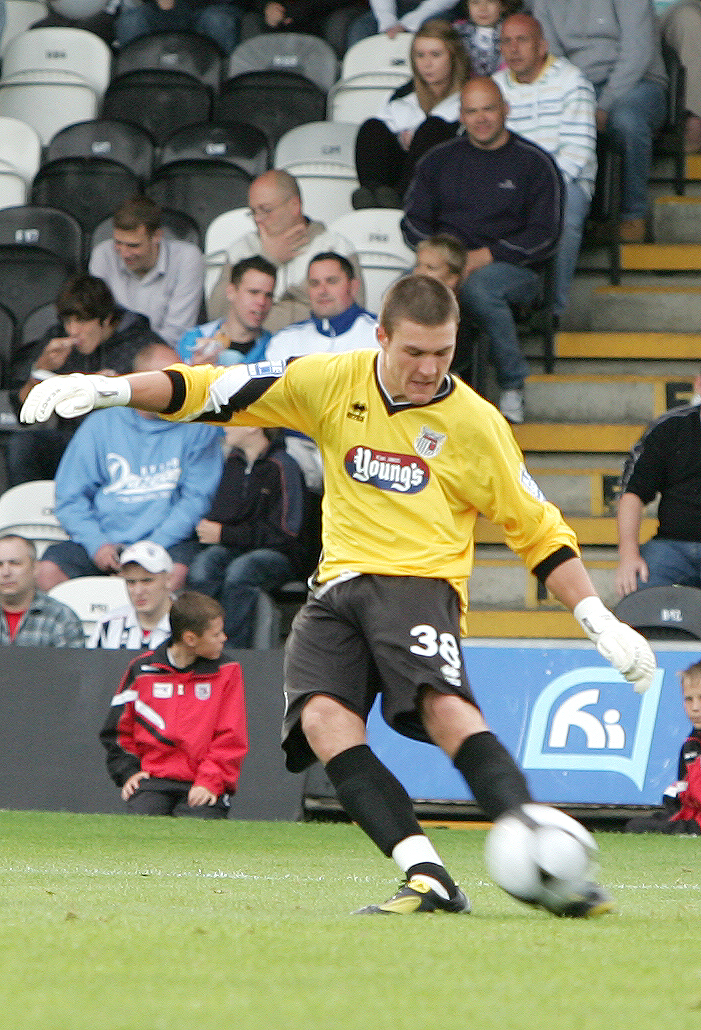
Richard O’Donnell is a Sheffield-born goalkeeper who began his career in Wednesday’s youth ranks. Breaking into the Owls’ first team as an understudy, O’Donnell made 20 senior appearances for Wednesday between 2006 and 2012. During that period, he was frequently loaned out for experience – including a stint at Grimsby Town in 2010. O’Donnell joined Grimsby on a one-month loan in August 2010 and made his senior debut in a televised Conference game, keeping a clean sheet in a 2–0 home win over Luton Town. That spell saw him notch 10 appearances for the Mariners and gain valuable first-team minutes. O’Donnell eventually earned his long-awaited Owls debut in March 2011 and, though he was released by Wednesday in 2012, the keeper’s early career was defined by the learning experiences he gathered at both Hillsborough and Blundell Park.
Robbie Stockdale

A solid right-back and occasional centre-half, Robbie Stockdale had a distinguished career that intriguingly intersected with both clubs. Stockdale first arrived at Sheffield Wednesday on loan from Middlesbrough in 2000, making six league appearances for the Owls. Despite the brief stay, it gave Wednesday fans a glimpse of the Scotland international defender. Years later, towards the end of his playing days, Stockdale signed with Grimsby Town in June 2008 – becoming the Mariners’ first new signing for the 2008–09 season. He quickly became a senior figure at Blundell Park, even scoring his first career goal for Grimsby in an FA Cup tie against Morecambe. Stockdale’s impact at Grimsby went beyond the pitch: he helped the club stave off relegation in 2009 and transitioned into a dual player-coach role, taking over as caretaker manager in March 2011 alongside youth coach Dave Moore. Under their short tenure, Grimsby earned two wins and a draw in four games.
Tony Crane
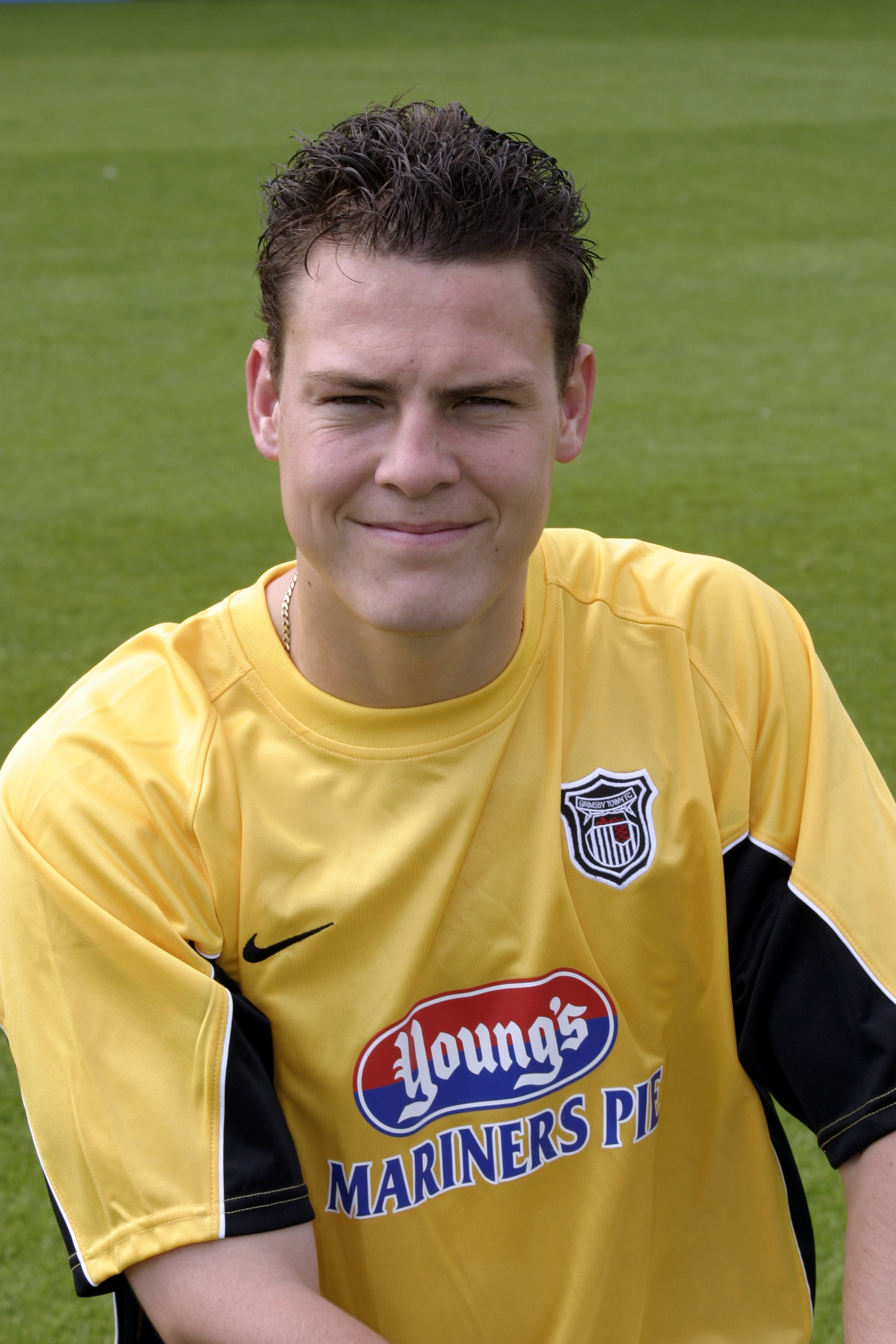
A youth product of Wednesday, Tony Crane was a versatile and imposing player who could slot in at centre-back, defensive midfield, or even as an emergency striker thanks to his 6’5” frame. Crane broke into the Sheffield Wednesday side in the early 2000s and made 48 league appearances, scoring four goals for the Owls. After Wednesday’s relegation from the First Division in 2003 (a season that, coincidentally, also saw Grimsby Town drop out of the second tier), Crane left Hillsborough and became Grimsby Town manager Paul Groves’ first signing for the 2003–04 campaign. At Grimsby, the Liverpool-born player was installed as a first-choice centre-half and quickly became a fan favourite for his committed displays. He did not shy away from a tackle – evidenced by the astonishing 15 yellow cards and 2 reds he accumulated in his debut Grimsby season. Crane even scored against Wednesday, grabbing a goal in a vital 2–0 win for Grimsby in April 2004. Unfortunately, that season ended in heartbreak as the Mariners were relegated on the final day, marking Crane’s third career relegation. Injuries then hampered his later years at Grimsby, and by 2006 weight and fitness issues saw him released.
Ian Knight

Ian Knight’s story is one of promise cruelly cut short. A tough-tackling defender, Knight emerged at Sheffield Wednesday in the mid-1980s and was highly rated – even earning a couple of England U21 caps. His ascent came to a devastating halt on 4 February 1987, when a reckless challenge in an FA Cup match shattered his leg in seven places. The injury was so severe that Knight later became one of the first footballers to successfully sue for damages over a career-ending tackle. After battling back to fitness, Knight left Wednesday having made 21 appearances, and in 1990 he signed for Grimsby Town. At Grimsby, he managed 21 league games and even scored two goals from defence. However, his old injury demons resurfaced – recurring problems limited Knight’s impact at Blundell Park, and he left the Mariners in 1992. Shortly thereafter, he retired from professional football at age 26. Knight remained connected to the game, working on Grimsby’s youth development programme after hanging up his boots.
Craig Armstrong
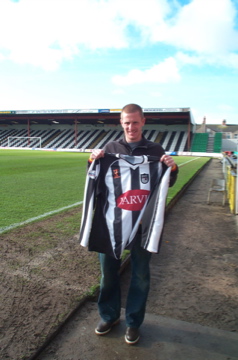
Craig Armstrong was a handy left-sided player who experienced both clubs during the early 2000s. A Nottingham Forest academy graduate, Armstrong joined Sheffield Wednesday for £100,000 in February 2002. Comfortable at left-back or midfield, he became a steady presence and made 35 league appearances (scoring once) in his time at Hillsborough. By 2004, Armstrong was seeking regular football and moved on loan to Grimsby Town – a switch praised by Grimsby’s then-caretaker boss Graham Rodger, who lauded Armstrong as “a very versatile lad…just what we’re looking for”. He indeed fit in seamlessly at Blundell Park, playing nine games on loan and even scoring in a memorable 6–1 thrashing of Barnsley in February 2004. Armstrong’s loan was made permanent for the rest of 2003–04, and despite Grimsby’s struggles that season, his experience and adaptability shone through.
Terry Curran
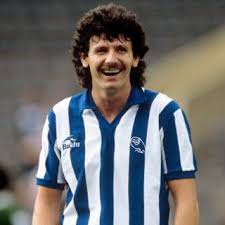
Terry Curran is fondly remembered at Hillsborough as one of the cult heroes of the early 1980s – and he even had a late-career cameo at Grimsby. An attacking midfielder/winger with flair, Curran joined Sheffield Wednesday in 1979 when the club was languishing in the Third Division. He immediately helped spark Wednesday’s revival: Curran scored 24 goals in the 1979–80 season to fire the Owls to promotion. His dynamic wing play and confident personality made him a terrace favourite. One infamous incident in 1980 saw Curran’s fiery temperament on display – a clash with Oldham’s Simon Stainrod led to a mass brawl and Hillsborough’s terraces being closed for four matches. By 1982, after 39 goals in 138 Wednesday appearances, Curran moved on amid disagreements with manager Jack Charlton.
After bouncing around several clubs (including a stint with Sheffield United, much to Owls fans’ chagrin), Curran’s playing days were winding down when he arrived at Grimsby Town in late 1987. Then in his early 30s and hampered by knee problems, Curran managed 14 appearances for Grimsby in the Third Division. Though he didn’t score for the Mariners, his experience was valuable in a young squad. Curran’s time at Blundell Park was short-lived – persistent knee injuries forced him to retire in 1988.
Paul Warhurst
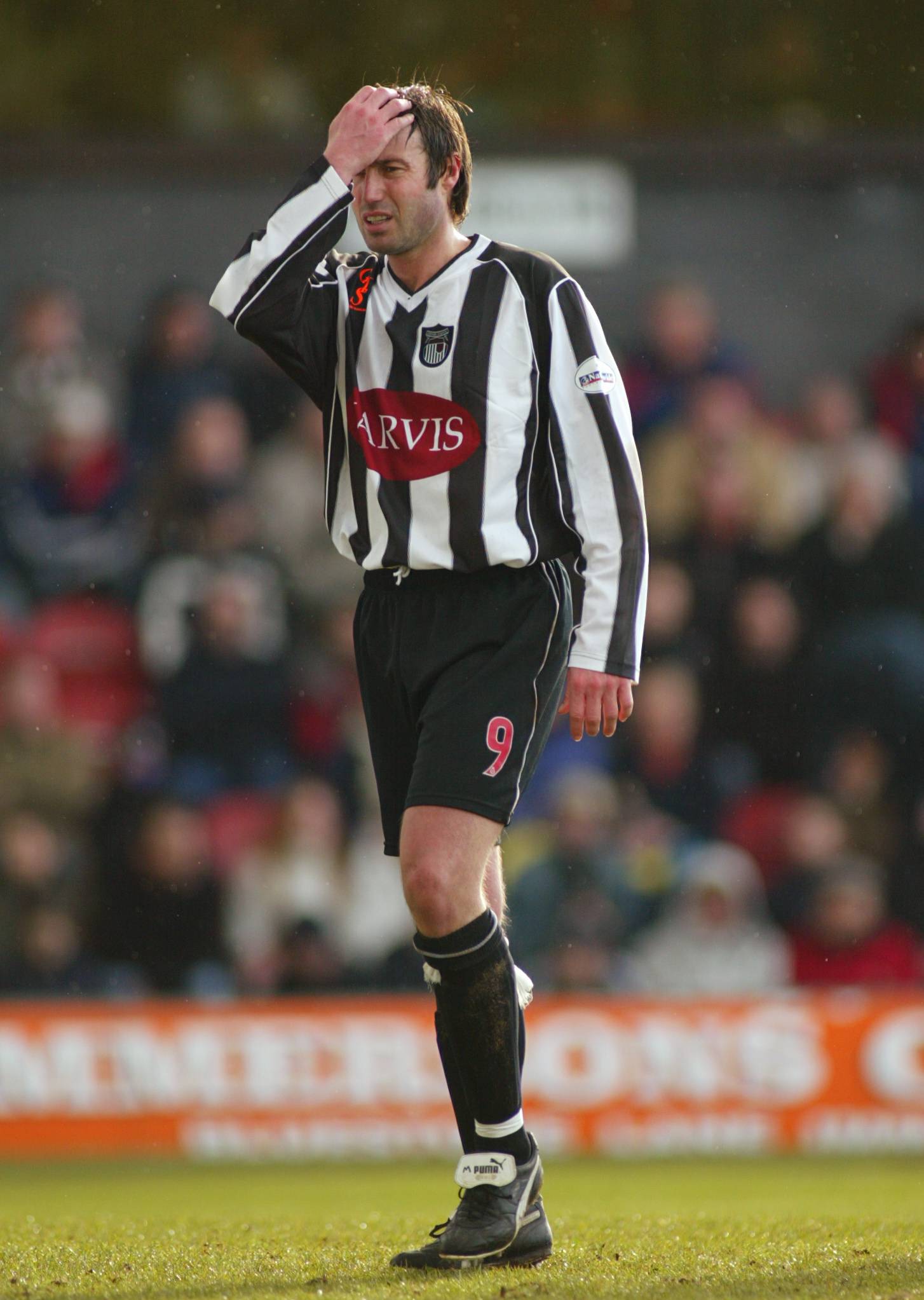
Paul Warhurst’s career path is a fascinating one, defined by versatility and some dramatic twists. He arrived at Sheffield Wednesday in the summer of 1991 as a £750,000 signing from Oldham – initially to play as a defender. Warhurst did his job quietly at the back until an injury crisis in 1992–93 prompted manager Trevor Francis to deploy him up front. The experiment was a revelation: Warhurst proceeded to score 12 goals in 12 games as a striker, catching the entire country by surprise. The hot streak earned him an England call-up (he narrowly missed out on a cap due to injury) and helped Wednesday reach both domestic cup finals in 1993. In fact, Warhurst remarkably played in the League Cup final as a forward and the FA Cup final replay as a centre-half – underscoring his jack-of-all-trades value. He left Wednesday in 1993 having tallied 18 goals in 88 appearances for the club and later picked up a Premier League winner’s medal with Blackburn in 1995.
Fast forward a decade, and Warhurst found himself winding down his playing days with a short stint at Grimsby Town. In March 2004, Mariners’ boss Nicky Law signed the 34-year-old Warhurst amid a flurry of recruits to fight relegation. The veteran’s debut for Grimsby was eventful: after a solid performance, he unfortunately headed an own goal late on to deny the team a win, resulting in a 1–1 draw against Bournemouth. Warhurst’s experience was still an asset – he filled in at centre-back, midfield and forward during his seven appearances for Grimsby, demonstrating the same adaptability he was known for. Ultimately, the Mariners were unable to escape the drop that season and Warhurst was released that summer.
Giles Coke
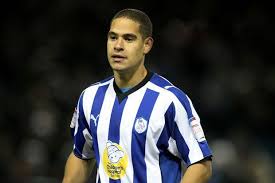
Giles Coke is a midfielder who, in many ways, bridged the modern eras of the two clubs. He joined Sheffield Wednesday in 2010, arriving from Motherwell, and was part of the squad that earned promotion from League One in 2012. Coke made 84 league appearances for the Owls across five seasons, scoring six goals. Wednesday fans will recall a couple of spectacular long-range strikes – one of which was voted the club’s Goal of the Year for 2014. A hardworking central midfielder with a good engine, Coke often provided energy off the bench and filled various roles in the Owls’ midfield rotation. After leaving Wednesday in 2015, he had spells at Bolton and Ipswich before injuries stalled his career. By early 2021, Coke was playing non-league football and looking for a way back.
That opportunity came at Grimsby Town. In February 2021, Coke signed with Grimsby on a short-term deal, joining a side struggling at the foot of League Two. Though the Mariners would ultimately be relegated that season, Coke’s influence in the dressing room was evident. He became club captain in August 2021 as Grimsby regrouped in the National League, bringing leadership and savvy to a youthful squad. In the 2021–22 campaign, Coke played 41 league games for Grimsby and helped guide the team to a dramatic promotion via the National League play-offs – an achievement sealed with victory at the London Stadium in June 2022. Having helped the Mariners return to the Football League, the veteran Coke then transitioned to coaching he briefly served as a youth development coach at Grimsby after retiring in 2022, before returning to Hillsborough in 2024 to become Wednesday’s U18 assistant coach.
Terry Cooke

Terry Cooke’s career is a tale of youthful potential and a winding road that saw him turn out for both Wednesday and Grimsby in the early 2000s. A product of Manchester United’s famous Class of ’92, Cooke found first-team chances hard to come by at Old Trafford, prompting a transfer to Manchester City in 1999. At City, he was sent on a series of loans – including a spell at Sheffield Wednesday in 2000. Cooke had two loan stints with the Owls (2000 and 2000–01), totalling 17 appearances and scoring one goal. Though only a short-term addition, he added some Premier League experience to Wednesday’s ranks during a turbulent period. By 2002, Cooke’s time at Man City was up and he made a permanent move to Grimsby Town. He had impressed in a brief loan at Grimsby – scoring on his debut against Norwich City and showing enough quality on the wing – which convinced Mariners’ boss Paul Groves to sign him full-time. Cooke became a regular on Grimsby’s right flank in the 2002–03 season, making 25 league appearances for the Mariners. Initially, he performed reasonably well, but his stint was marred by an off-field falling-out with manager Groves and the arrival of loan signing (and local hero) John Oster, which saw Cooke lose his starting spot. He departed Grimsby in 2003.
Fate would bring Cooke back to Sheffield Wednesday soon after. He rejoined the Owls for the 2003–04 season, adding 23 appearances and 2 goals in his second go-around at Hillsborough. By this time Wednesday were in the third tier, and Cooke’s experience was useful in a promotion push that ultimately fell short that year. After 2004, the well-travelled winger left England to continue his career in the MLS with Colorado Rapids. Terry Cooke’s time in Sheffield and Grimsby might not have hit the heights once predicted for him, but he remains a notable name for having donned both clubs’ colours during a unique career.
Nigel Jemson
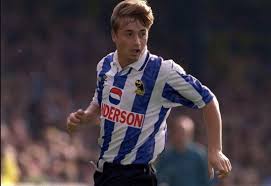
Nigel Jemson made his mark as a striker who always seemed to have a taste for the big occasion. He is widely remembered for scoring the winning goal in the 1990 League Cup Final as a youngster at Nottingham Forest. Not long after that Wembley heroics, Jemson was signed by Trevor Francis for Sheffield Wednesday in September 1991 for a hefty £800,000 fee. He contributed to a successful 1991–92 season as Wednesday finished third in Division One, and over his stint with the Owls he tallied 9 goals in 51 league appearances. Amid competition from the likes of David Hirst and Mark Bright, Jemson often found himself in and out of the starting lineup at Hillsborough. In late 1993, seeking more playing time, he went on loan to Grimsby Town. Though brief, his month at Blundell Park was productive – Jemson scored 2 goals in 6 appearances for the Mariners in November 1993. Those goals (one of which came on his Grimsby debut) gave a glimpse of the scoring touch he would later showcase at other clubs. After returning to Wednesday, Jemson soon moved on, embarking on a journeyman tour of clubs that included Notts County, Oxford United, and an iconic FA Cup giant-killing with Shrewsbury Town in 2003.
Adam Proudlock
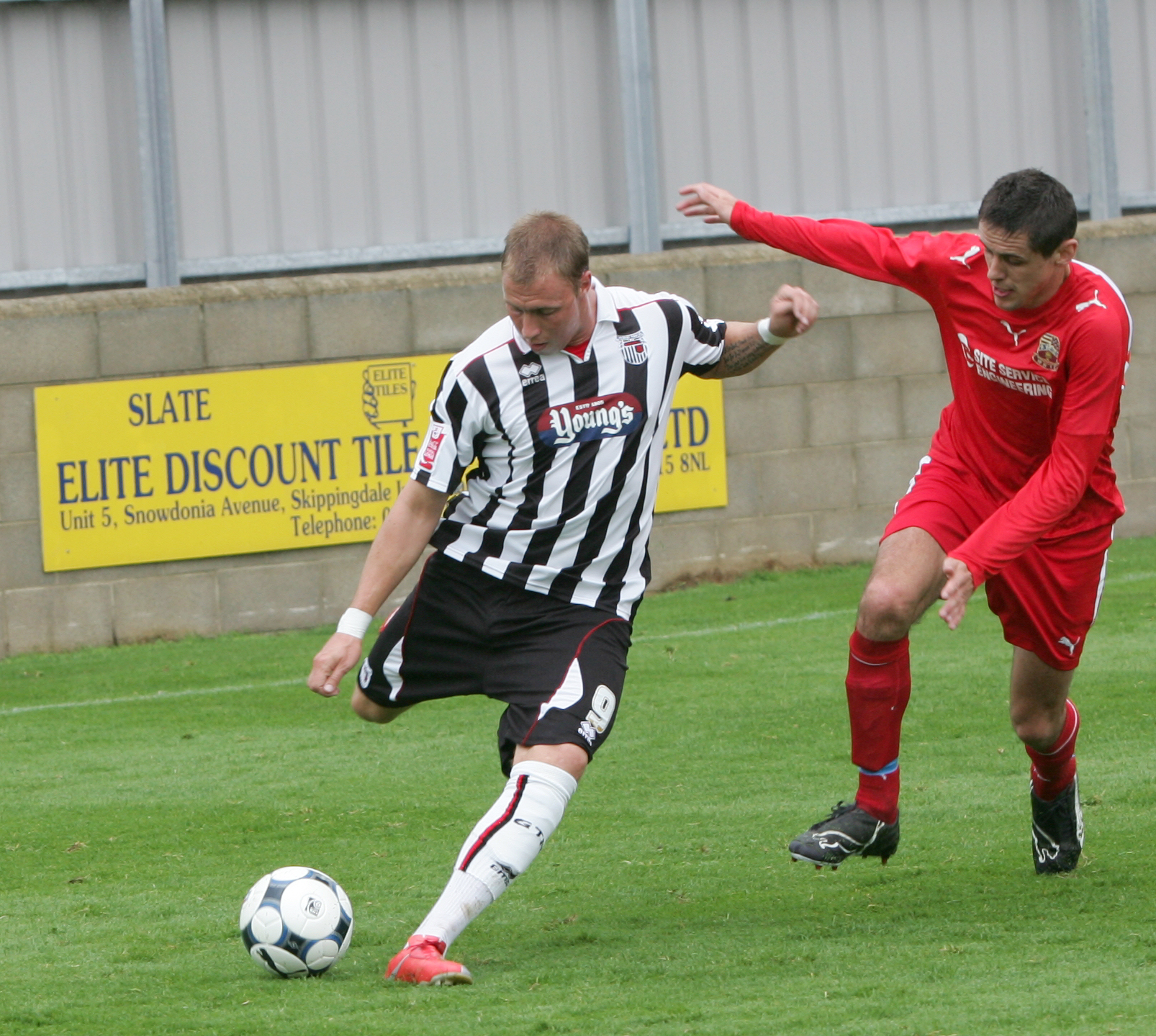
Adam Proudlock was a talented forward whose career had its ups and downs, including notable chapters at both Sheffield Wednesday and Grimsby Town. A Wolves academy product, Proudlock arrived at Sheffield Wednesday initially on loan in late 2002 and made a strong enough impact (2 goals in 5 games) that the Owls signed him on a three-year permanent deal in September 2003. He became Wednesday’s top scorer in the 2003–04 season, hitting the net nine times as the club sought to climb out of Division Two. Fans appreciated Proudlock’s knack for poaching goals, but his progress was derailed by a broken leg suffered in a freak training ground accident in November 2004. Sidelined for the remainder of that promotion-winning 2004–05 campaign, Proudlock struggled to regain his place. Early in 2005 he was loaned out, and by September that year his Wednesday contract was terminated following a disciplinary breach. In total, he logged 17 goals in 62 appearances for the Owls (in all competitions) – a respectable haul cut short by misfortune and off-field issues.
After a few seasons in the lower leagues, Proudlock found a second wind at Grimsby Town. In November 2008, while at League Two side Darlington, he joined Grimsby on a two-month loan to bolster a struggling attack. He made a positive impression, scoring on his league debut for the Mariners against Port Vale and showing flashes of quality up front. That prompted Grimsby to sign him permanently in January 2009. Partnering with the pacey Jean-Louis Akpa Akpro in attack, Proudlock enjoyed a purple patch – highlighted by a brilliant hat-trick against local rivals Lincoln City in a 5–1 victory in March 2009. It was a day for the Grimsby faithful to savour, as Proudlock’s goals sank the Imps and secured local bragging rights. Unfortunately, consistency eluded both Proudlock and the team thereafter. He remained with the Mariners through the ill-fated 2009–10 season, which saw Grimsby relegated out of the Football League. Proudlock’s two-year spell yielded 10 league goals for Grimsby, and while the end result was disappointment, he did provide some memorable moments.
 Up The Mariners