If you grew up in the nineties then the Mariners’ momentous Carabao Cup Second Round victory over Manchester United has a bit extra sweetness to it. If you are to believe the majority of the football content churned out on 24-hour news channels and social media, football began in 1992 with the dawn of the Premier League.
The poster boys for the first 15 years of the self-proclaimed ‘best league in the world’ where Manchester United. They had the best manager, the best players, the biggest stadium, and a group of top-class young players coming through at the same time, the likes of which hadn’t been seen at any level since the sixties. And they duly won pretty much everything before them – title after title, cup after cup, European conquests, whilst seemingly swimming in more money than the rest of England’s 91 league clubs put together.
They achieved this by largely pissing people off. Of course there was sumptuous football – the cast of players working their way through Old Trafford between 1993 and 2008 is like a who’s who of the game – Robson, Keane, Schmeichel, Cantona, Giggs, Rooney, Ronaldo – and that’s just scratching the surface. Like all top teams, Manchester United had an edge to them, important goals were scored in so-called Fergie Time (games seemed to drift on and on until Manchester United got the goal they needed), they hounded officials in a pack, and kicked the opposition off the park when it suited them. Nothing different to say a Leeds side of the seventies but this time the cameras were running 24 hours a day – everything was visible to the eye.
But what this team had that the great Leeds, Liverpool dynasties didn’t have was wall-to-wall coverage and daily access to people’s living rooms across the world. This was the truly big change that the Premier League brought to English football. It seems unusual in a world where there are hundreds of live televised matches per week, but children of the eighties were used to one live match on a Sunday afternoon, the odd European tie in midweek, and England games tucked away on BBC Two – Sky’s partnership with the Premier League ensured there were live games on Sundays and Mondays – later followed by Saturday lunchtime, Saturday evening, Friday night, midweek, and seemingly Thursday at 3am, Christmas Day and three times on Good Friday. As the league’s best team, Manchester United were the ultimate beneficiaries of this.
Glory, Glory, Man United
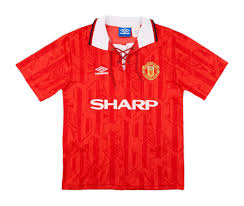
Almost overnight, schools and parks across the country seemed to be populated by red, Sharp-emblazoned shirts (the awful one with the tie up collar). Everyone wanted to be following a winning side and Manchester United won most of their football matches. What this meant for smaller teams like Grimsby Town was that they largely got swept away in the local public conscious. ‘What are you watching that shit for?’, would often be a question from a red-shirt bedecked critic. It was now much easier and cost-effective to spend your matchday ticket money on a monthly Sky Sports subscription. You couldn’t even get away from them on the weekly flick through Top of the Pops.
But the thing was, Grimsby Town were far from shit at this point. The early-nineties saw them rubbing shoulders at the top of the newly-christened Division One alongside the likes of Newcastle United, Nottingham Forest, Wolves, and Sunderland, but as the X account of OnThisGTFCDay points out, they were doing so in front of sub 4,500 crowds. To put this into perspective, some of the bigger teams in the division were bringing nearly 2,000 fans to Blundell Park – there were some weeks the Mariners were struggling to get 3,000 home fans, yet they were playing some of the best football in their history.
Fast forward 30 years, and Manchester United fans will tell you they have had it tough. With Ferguson retiring, Old Trafford in desperate need of repair, and a takeover by the American Glazer family prioritising profit over prizes, has seen the Red Devils’ fortunes take a tumble both on and off the field. Since Ferguson retired, United have flipped and flopped their way through various managers, employing different philosophies, and paid incredible sums for frankly average players – the club has been the butt of the joke for many content outlets for a number of seasons now.
Compare and contrast with the Mariners, who in the space of ten years went from the top of Division One to the bottom of the Football Conference, twice staved off the threat of administration, have been relegated four times, and suffered from a conveyor belt of mercenary players, divisive managers, and enough boardroom turmoil to make the cast of Dallas blush.
The biggest game in a generation
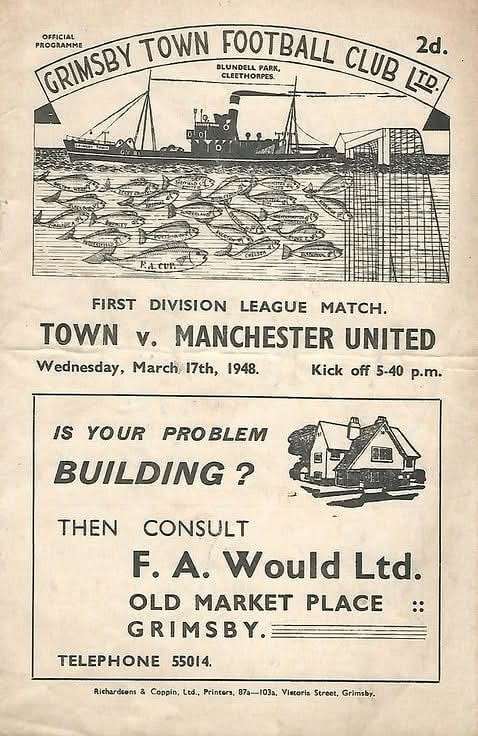
And that was just one aspect of the cup tie that was the biggest game at Blundell Park in a generation. This was the golden ticket, the one worth waiting for; you would have to be in your eighties to remember the last time the two teams met – a 1-1 draw at Blundell Park in March 1948. The Mariners’ big matches against Liverpool, Everton, Chelsea, Villa, Spurs, and Newcastle are all within living memory for most – tales of the tussles against the Red Devils have to come from grandparents…and then some.
That’s what made the tie so special. So much water has passed under the bridge since that date in the late-forties. Town’s trajectory has largely been downward – they haven’t ever reached the dizzy heights of the top flight since, although they have paved their own way through football history thanks to names like Shankly, McMenemy, and Buckley, of players like Briggs, Boylen, Waters, and Groves (to name just a few), from cup upsets and trips to Wembley – sometimes we need to take a step back and realise that where others have fallen by the wayside, the Mariners are still afloat and thriving.
We know about United’s output from the nineties to the present day but it’s hard to believe that this global juggernaut of football were largely ‘just another team’ in Division One before World War II. The leadership of Sir Matt Busby changed the club’s fortunes immeasurably when he took charge of the club in October 1945. As Town trickled down the leagues, the Red Devils’ stock soared through the triumph and tragedy of the Busby Babes, the United Trinity of Best, Charlton and Law, and even into the leaner seventies and eighties, they were still dining at European football’s top table. As Grimsby fans, it’s ingrained into us at a young age that Old Trafford’s record attendance is 76,962 for the Mariners’ 1939 FA Cup Semi Final defeat to Wolverhampton Wanderers – the closest Town had come to pitting their wits against Manchester United in the 77 years since that 1-1 league draw was meeting Barrow at Old Trafford in an FA Cup Second Round Second Replay in November 1964 – in front of less than 10,000 fans.
Perhaps that’s what made the roar so loud when the two teams emerged from the tunnel at Blundell Park in August. Forget Fulham, Sheffield United, Spurs – that was the largest sound that the Mariners’ faithful has ever produced on their home turf. The antiquated Main Stand was shaking, and the reverberations were surely felt by the tankers moored up in the North Sea.
The Mariners have had some tremendous giant-killings before but nothing on the level of this. Ruben Amorim named as strong a side as you would expect him to, given that his United team don’t have European football this season. It’s hard to think that the victory over Tottenham was 20 years ago, Liverpool closing in on 25, the overlooked Leicester result nearly 30 years ago, and Everton over 40 years ago. But in hindsight, each of those results had a traditional ‘lower league team in the cup’ approach to it.
Even the most ardent of Mariners’ fans will admit the team got hammered at Goodison Park all those years ago. It was just a matter of last-ditch defending, and taking the one opportunity that came their way. It was similar at Liverpool, the Reds dominated that game, and it took heroics from Danny Coyne in goal, Town taking their chance through Marlon Broomes, and then a once-in-a-lifetime strike from Phil Jevons to win it.
It was much the same against Tottenham. Russell Slade’s game plan was to force Spurs into long balls from distance that could be hoovered up by the central defensive pairing of Rob Jones and Justin Whittle, and then try to catch the Londoners on the break with the pace of players like Michael Reddy and Andy Parkinson – it was one such break that led to the corner from which Jean-Paul Kamudimba Kalala scored the winner. Against Leicester, it took manager Alan Buckley to have a massive change of philosophy to beat the Foxes at their own game with substitute Steve Livingstone inspiring a physical 3-1 victory.
Get into ’em
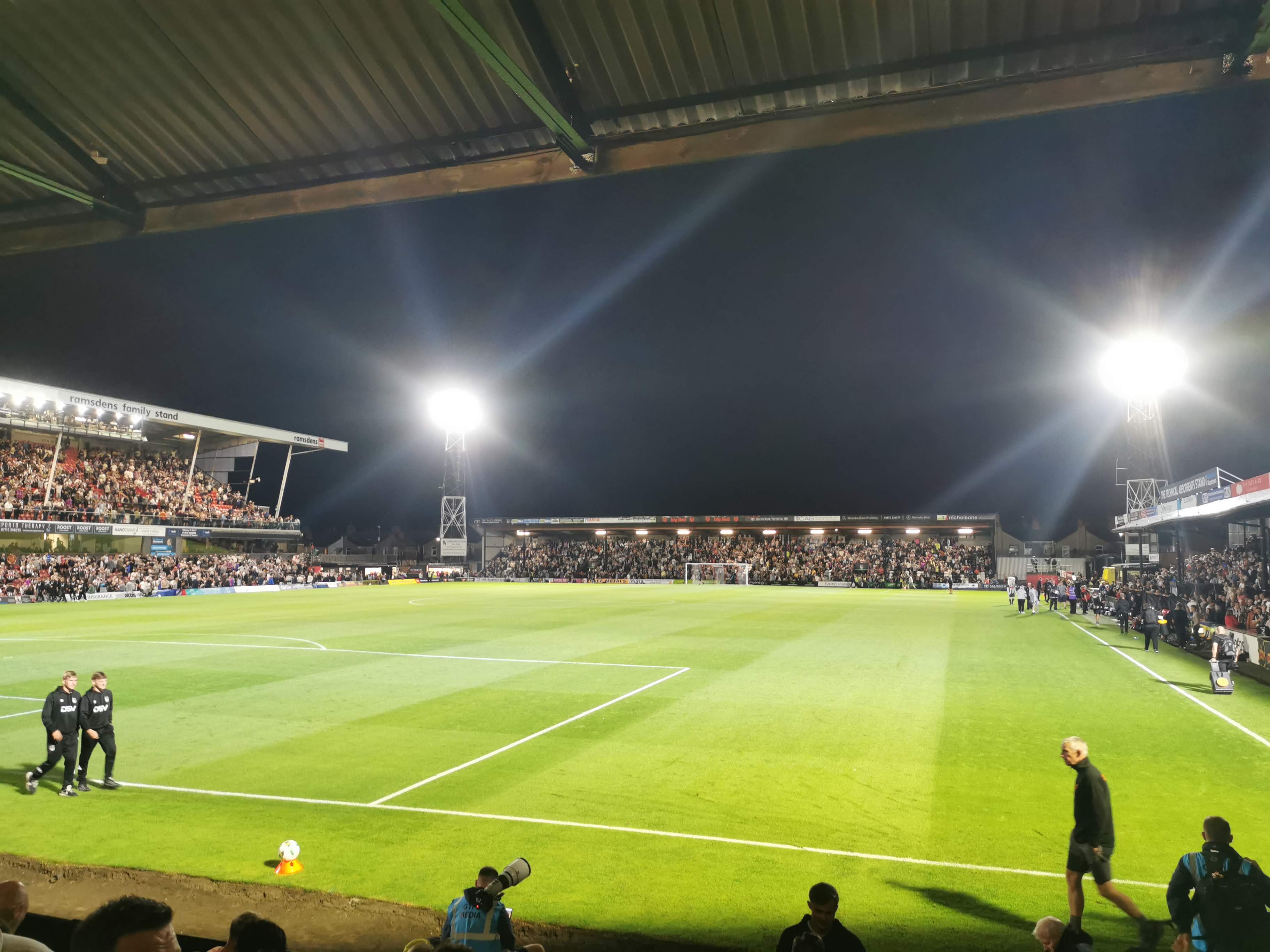
Never have I seen in my 35-plus years, a Grimsby Town side take it to a top flight side like they did to Manchester United in the Second Round of this season’s Carabao Cup. Yes, this isn’t a top-level Manchester United, but it is still a Manchester United team all the same – £700-million’s worth, hundreds of international caps, and a cabinet full of honours. The gap between the top flight and the lower leagues isn’t what it used to be, it’s a chasm that would make the Grand Canyon blush. Before the game, had you been told that Manchester United were to run out 4-0 winners, then it might have been classed as an expected result, but David Artell’s Grimsby side had different ideas.
The tone was set within the opening two minutes as Darragh Burns flashed a ball across the face of the Manchester United goal with Charles Vernam lurking. Artell exposed the flaws in Amorim’s rigid 3-4-3 system, and for much of the first 20 minutes it was the League Two side that penned their mighty opponents back in their own half.
Then came the moment we had all dreamed of. Just 20 minutes into the game, Manuel Ugarte and Amad Diallo only succeeded in tackling each other in the centre of the park. Kieran Green mopped up a loose ball and immediately spread it forward to young striker Cameron Gardner. It was excellent hold-up play by the Scottish Under-21 international, taking one touch back to create the space between the ball and his marker, allowing the wide men to catch up with player. He laid the ball off to Burns on the right wing, who stepped inside his man, and floated the ball towards the back post where Vernam was afforded acres of space. Such was the quality of the ball to the back stick, and the time that Vernam had to control and shoot that one of the Town substitutes was celebrating the goal as the cross was in the air.
Vernam’s first touch was sublime, his second unnerving – a firm, low shot beyond Andre Onana in the away goal. Blundell Park had not seen bedlam like it in years. Grimsby Town had sliced their way through the Manchester United defence like one of the town’s fish filleters preparing a famous haddock on the docks. Now came the big test; surely it would be backs to the wall for the next 70 minutes?
How wrong could you be? Still Town pressed and harried their loftier opponents. They penned United back so far that Andre Heaven was practically consigned to the goal-line in the corner between the Osmond and the Lower Ramsdens stand. And the players could sense the jitters in the visitors’ defence – it was as if these multi-million pound superstars could read the following morning’s back page headlines in their minds.
De Ligt dallied, Maguire mithered and Onana flapped, as Gardner was denied the second by a handball ruling. Then, on the half-hour came a Town corner. Vernam had already tested Onana from a set piece, putting one straight underneath the crossbar, which the ailing ‘keeper fingertipped away. This time the corner was short. Vernam and Burns worked a yard of space, the ball came into the box, Onana came flying off his line like one of the old Lightning jets that used to take off from nearby RAF Binbrook, only he missed his target (unless he was aiming for the jaw of Harvey Rodgers), and left former Manchester United youngster Tyler Warren with the simplest task of tapping into the empty net. If the first was dream-land, then the second was the stuff of fantasy.
As the game approached half-time, the first rumbles of thunder echoed through the sky, with flashes of lightning on the horizon – you began to be in the unthinkable position of the elements being the Mariners’ biggest problem at that moment in time – thoughts of Macclesfield and Derby, and how an early-season deluge could have a negative effect on the Blundell Park drainage immediately sprang to mind. But the electricity in the air couldn’t match that in the stands, and a mixture of elation and astonishment greeted the half-time whistle.
45 minutes from history
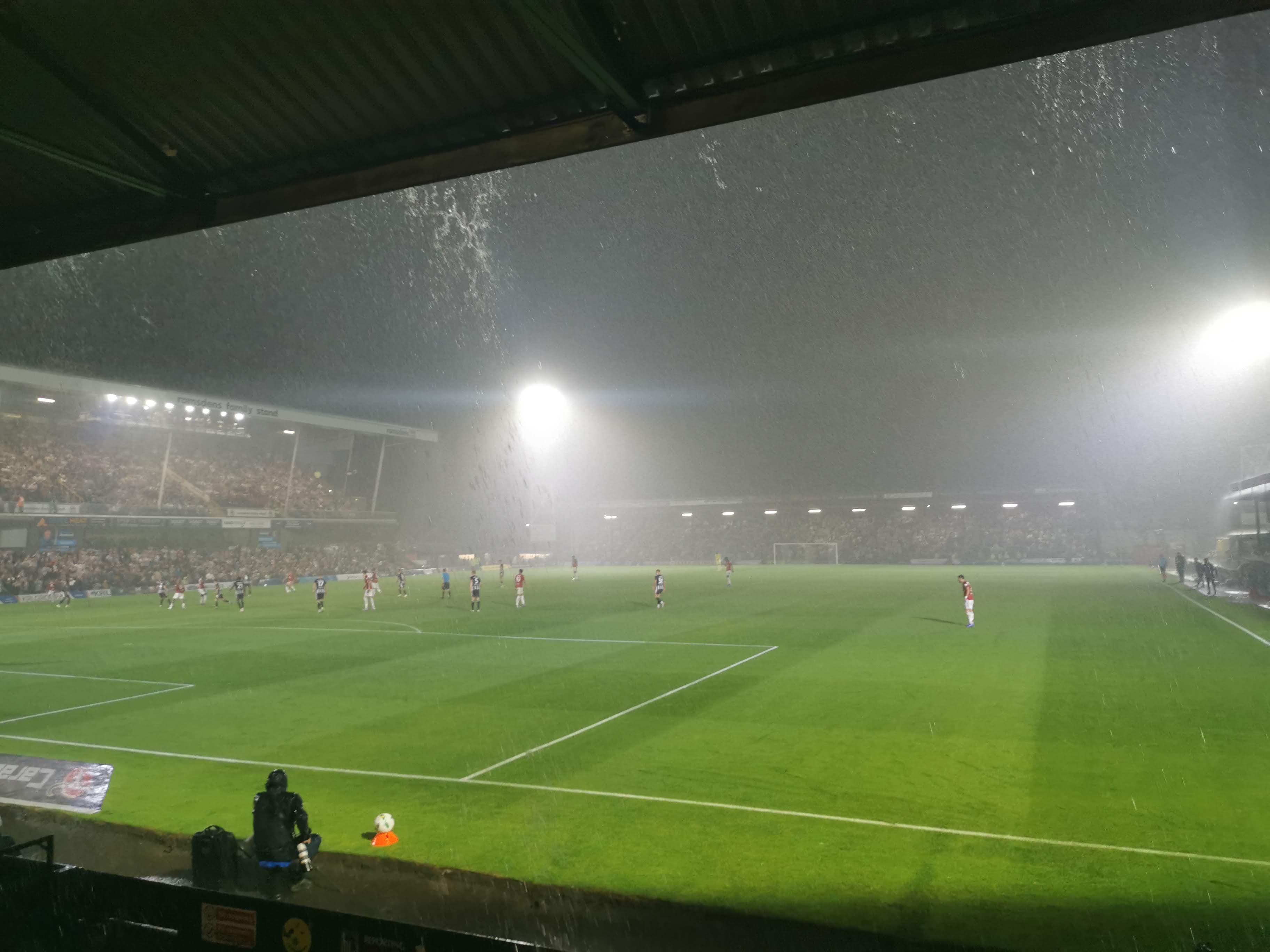
The start of the second half showed the luxuries at Amorim’s disposal. On came new signings Matthias Cunha and Bryan Mbuemo, alongside club captain Bruno Fernandes – over £200-million’s worth of talent coming from the bench. But the expected torrent came from above, not from the Manchester United half, and the Mariners’ spirits weren’t dampened. For any armchair pundits watching, the way Town undid Amorim’s system in their next foray on goal should speak volumes. With his full backs advanced, Amorim’s side were undone again by Town’s pressing from the front. One flick beyond right wingback Diego Dalot, and the Mariners sense an opening, with a centre-half racing across to cover the gap, the marauding Green exploits the great open spaces of Blundell Park and, all-of-a-sudden, Manchester United find themselves outnumbered three-to-one at the back.
Green arguably had too much time and too many options. He picked out the run of Burns into the box, but his neat flick towards goal was frantically cleared away by Andre Heaven. As the downpour continued, one couldn’t help but keep a close eye on the aptly-named referee Tony Harrington, especially when the ball held up in the standing water and tackles went sliding in. No such problems for Town ‘keeper Christy Pym though; diving full length to keep out a trademark long-range effort from Fernandes.
The more the game pressed on, the more you expected the onslaught from United. Instead, it was the Mariners who were cruelly denied the next goal. A cross-field ball from Burns was inadvertently directed into the path of Gardner, who advanced and finished unerringly beyond Onana and in off the far post like a striker with three hundred more games to his name, only to be unfairly and unjustly flagged offside.
Then came the moment United fans wanted. In fairness, it was a very clever finish from Mbuemo; jinking and jockeying his way to the edge of the ‘D’, until he could see the whites of the post in his sight, and then using Jayden Sweeney as a shield to guide the ball into the bottom corner of the goal. You expected a sense of dread and alarm to converge from the home ends but Blundell Park is a different place nowadays. Still the home fans urged their favourites on but tired legs and tired minds were beginning to show.
And the conditions still had one more trick up their sleeves. Cameron McJannett raced across to try and intercept a probing ball forward but he air-kicked a puddle; thankfully Benjamin Sesko pondered too long, and the Mariners were able to regroup. But the pressure was beginning to tell. Cross after cross rained in on the Town goal, as Amorim threw more internationals into the mix (although bizarrely refused to change his system with Mason Mount turning out at left back). The cameras perhaps didn’t catch some of the more telling points of the game. Cunha, a £60-million summer signing from Wolves reduced to remonstrating with a cramp-riddled Rodgers, who departed the pitch soon after.
To be truthful, with teenagers on the field, a loan signing from Bradford making his debut, and players slotting in wherever they could – it was a pretty patched up Town side that finished the game. Then, with one minute to go, the moment you dreaded. Another corner was sent in deep and met by the head of Maguire – the England man rescuing his club again, like he has done so many times before. As the former Hull defender wheeled away in celebration, you feared the worst – could the Mariners survive injury time?
The answer was yes…just. A scramble ensued in the box. Pym threw himself at the ball twice. The next time it came into the area, the ball bobbled between two Town defenders to Sesko, on his full debut following a big-money summer move…there was an audible gasp, and then a sigh of relief as the ball sailed harmlessly over the crossbar. So, penalties it was. Many agreed that the moral victory had already been achieved. Had the scoreline been 4-0 to Town by the time the Red Devils got themselves on the scoresheet, there would have been few complaints – for two-thirds of the game not only did they match their loftier opponents – they were superior. If Artell’s side lost now, they could do so with their heads held high. Blundell Park is a different place nowadays though, and this being one of the most memorable games in Blundell Park’s 125-year life, this cup tie had one final twist up its sleeve.
Striking the jackpot in the lottery of penalties
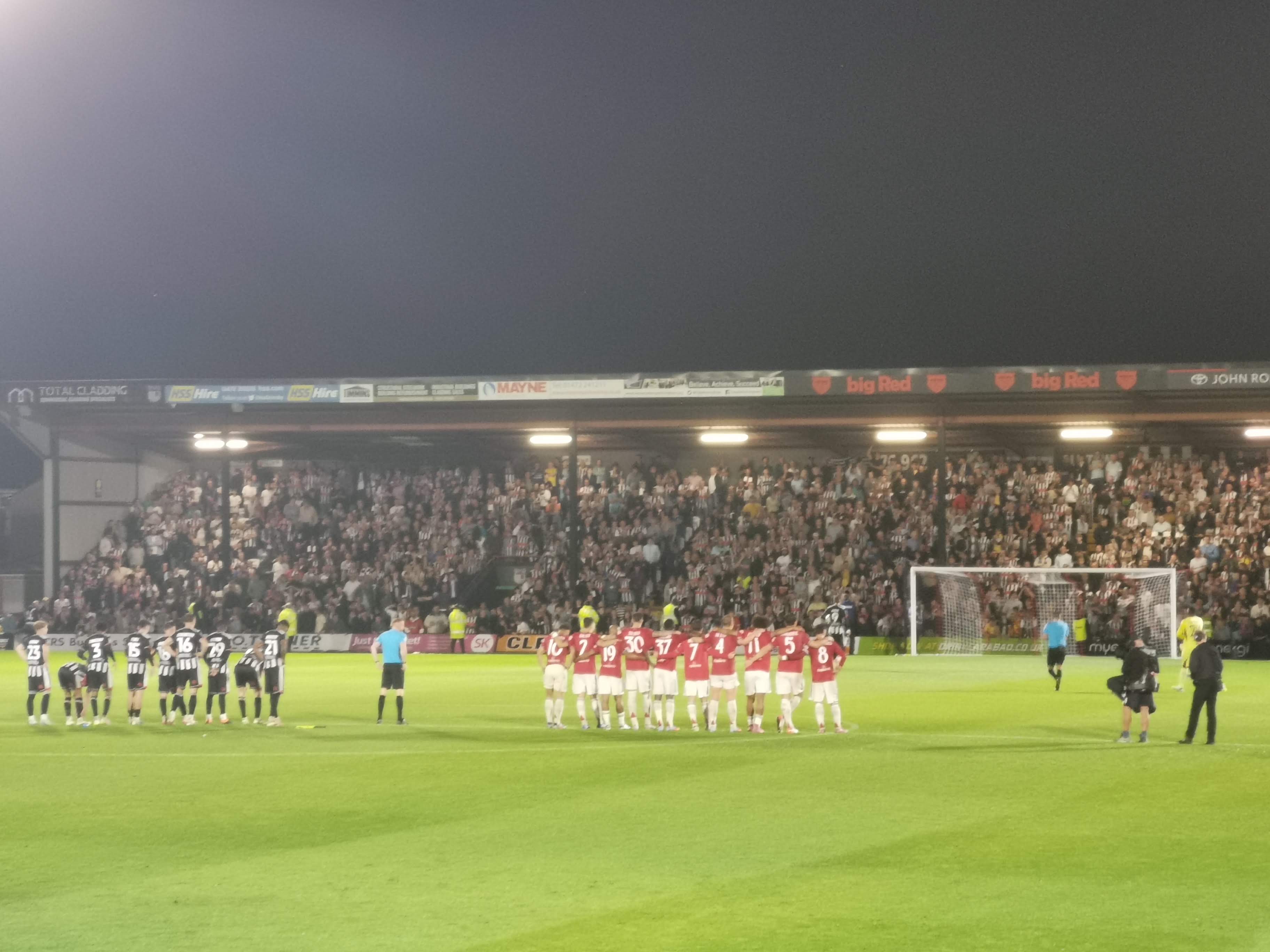
Have you ever seen a penalty shoot-out like it? After Clarke Oduor’s miss, you sensed that was it. But Blundell Park is a different place nowadays. Cunha stepped up to surely send United through, but rolled his spot kick into the grateful grasp of Pym. Now it was sudden death. Up they went, centre-halves, full backs, players you wouldn’t associate with going anywhere near a penalty. Both goalkeepers dispatched theirs with the utmost confidence. We went back around again, a sight not often seen in football, and one that put the previous season’s marathon shoot-out win over Bradford to shame.
Then came the moment where time stood still again. Like when Jevons fired in that shot against Liverpool, when Donovan rounded goalkeeper Andy Woodman at Wembley, when Wilkinson’s header arched its way to the goal at Goodison Park. You could hear a pin drop…and then euphoria. Up stepped Mbuemo, full of confidence. He took a short run up like he’s done countless times before but this time he perfectly placed the ball onto the face of the bar. An explosion of joy followed. Fans rushed from their seats and embraced the new generation of heroes. Forget Anfield, forget the play-off game against Fulham, forget Braintree, forget Spurs, nothing but the first trip to Wembley can match this moment. It was an ‘I was there’ moment like no other, one that is sure to be passed down through generations. Midweek celebration sessions to the wee hours with no concern for work the next morning (or in a few hours as the case may be).
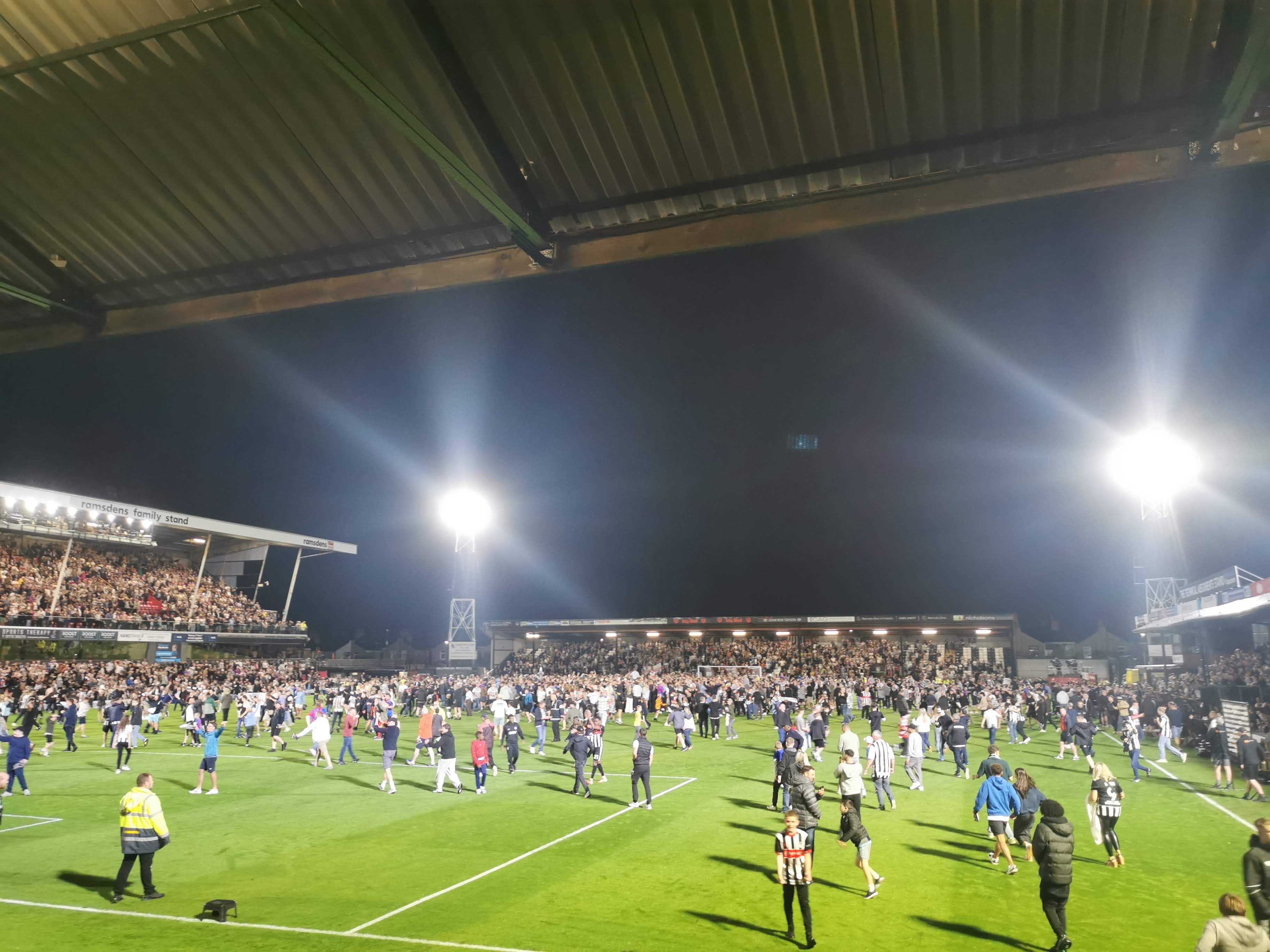
What spoke volumes was the amount of chatter in the area in the days after the game. People who didn’t watch football, would only know if England were playing because someone else told them. I was stopped by a woman in the newsagent; “did you watch the Grimsby versus Manchester United game?”. “Wasn’t it amazing?”, came the rhetoric as she struggled to catch her breath, “my husband was torn watching it; his work has season tickets at Manchester United.”
“Manchester United?”, I replied with a wry smile, “what’s he watching that shit for?”
 Up The Mariners